
- All
- Product Name
- Product Keyword
- Product Model
- Product Summary
- Product Description
- Multi Field Search


 |


| Quantity: | |
|---|---|
The HDPE End Cap is a critical piping component designed to seal the open ends of HDPE pipes. Made from high-quality polyethylene, it provides a secure, leak-proof termination that protects the pipe interior from debris, moisture, and environmental damage. Unlike temporary plugs, this fitting is a permanent solution for closing pipe ends in both residential and industrial systems.
Every piping network has open ends that require sealing to maintain system integrity. The HDPE End Cap serves two key roles: it prevents fluid leakage from the pipe end and protects the pipe’s interior from contaminants such as dirt, rust, and insects. This protection extends the life of the pipe and ensures that the system operates efficiently, free from clogs or damage caused by external elements. It is an essential fitting for completing piping installations and modifying existing systems.
| Specification(mm) | dn/dn1 | L | H | Item Number |
| D75 | 75 | 81 | 67 | LYGYD11-75 |
| D90 | 90 | 90.5 | 75 | LYGYD11-90 |
| D110 | 110 | 94 | 77 | LYGYD11-110 |
| D125 | 125 | 94 | 77 | LYGYD11-125 |
| D140 | 140 | 96 | 79 | LYGYD11-140 |
| D160 | 160 | 99 | 80 | LYGYD11-160 |
| D180 | 180 | 108 | 80 | LYGYD11-180 |
| D200 | 200 | 103.5 | 80 | LYGYD11-200 |
| D225 | 225 | 105 | 80 | LYGYD11-225 |
| D250 | 250 | 115 | 90 | LYGYD11-250 |
| D280 | 280 | 118 | 90 | LYGYD11-280 |
| D315 | 315 | 130 | 90 | LYGYD11-315 |
| D355 | 355 | 131 | 90 | LYGYD11-355 |
| D400 | 400 | 132 | 90 | LYGYD11-400 |
| D450 | 450 | 138 | 90 | LYGYD11-450 |
| D500 | 500 | 130 | 90 | LYGYD11-500 |
| D630 | 630 | 145 | 95 | LYGYD11-630 |
| D710 | LYGYD11-710 | |||
| D800 | LYGYD11-800 | |||
| D900 | 900 | 170 | 120 | LYGYD11-900 |
| D1000 | 1000 | 175 | 125 | LYGYD11-1000 |
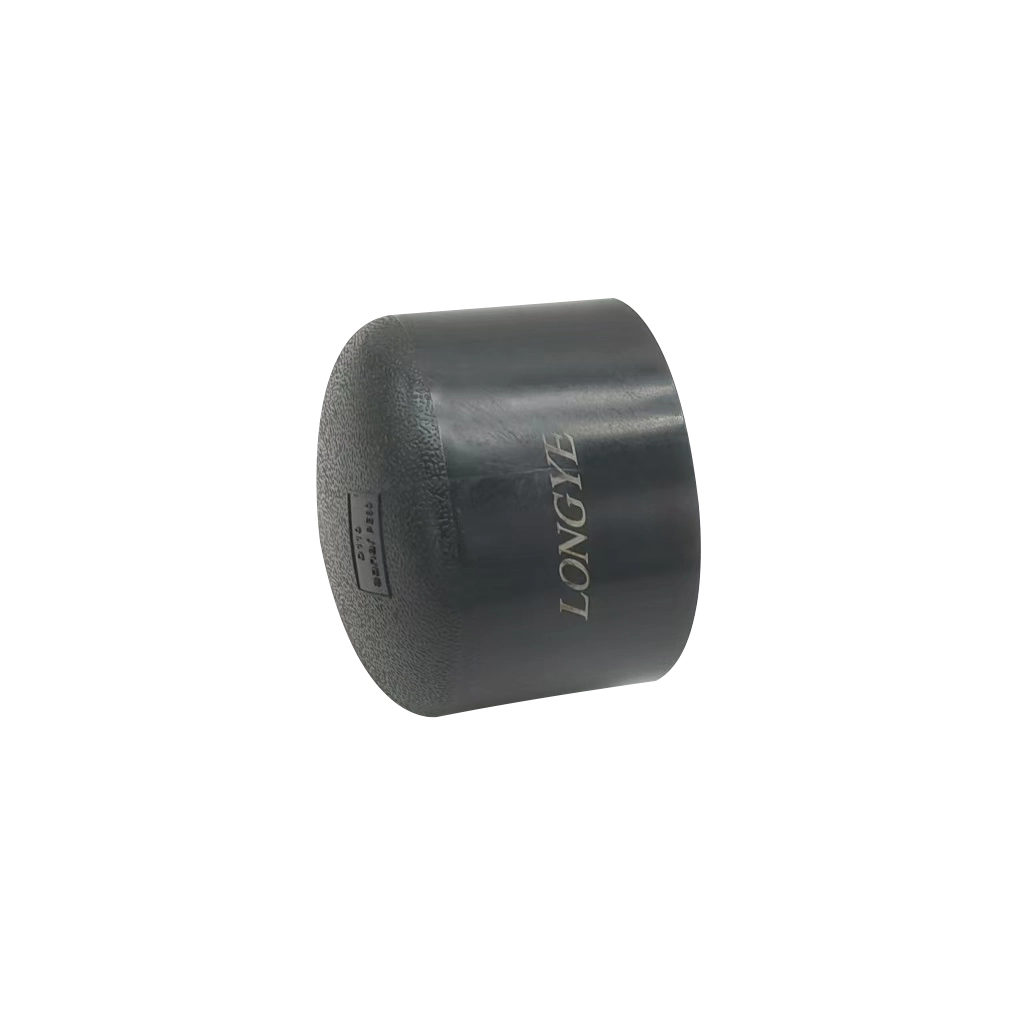
Crafted from high-grade HDPE (High-Density Polyethylene), the end cap offers exceptional durability and flexibility. HDPE is known for its resistance to impact, corrosion, and UV radiation, making the HDPE End Cap suitable for indoor, outdoor, and underground applications. It does not crack or degrade easily, ensuring long-term performance.
The HDPE End Cap is engineered for a tight, leak-proof seal. Its design conforms to the inner diameter of HDPE pipes, creating a snug fit that prevents fluid loss and keeps contaminants out. When installed correctly (typically via hot-melt welding), it forms a permanent bond with the pipe, eliminating the risk of accidental disconnection.
Designed to withstand system pressure, the HDPE End Cap maintains its structural integrity even in high-pressure piping systems. It does not bulge or deform under pressure, making it suitable for water supply, industrial fluid transport, and irrigation systems where pressure fluctuations are common.
The HDPE material provides excellent impact resistance, allowing the HDPE End Cap to withstand physical damage during installation or use. It can absorb vibrations and shocks without cracking, making it ideal for applications in areas with mechanical activity or foot traffic.
HDPE is a non-toxic, recyclable material, making the HDPE End Cap an eco-friendly choice for piping systems. It does not leach harmful chemicals into fluids, making it safe for use in drinking water pipes and food-processing facilities.
The HDPE End Cap is simple to install, requiring only a hot-melt welding machine (for permanent connections) or a push-fit design (for temporary or low-pressure applications). It does not require specialized skills, and the installation process is quick, reducing labor costs and project time.
In cold water supply systems (residential, commercial, or municipal), the HDPE End Cap seals the ends of unused pipe branches or main lines. It prevents water leakage and protects the pipe from contaminants, ensuring that the water remains clean and safe for use.
For drinking water pipes, the non-toxic nature of HDPE makes the HDPE End Cap the ideal sealing solution. It does not affect water quality, and its leak-proof design prevents contamination, ensuring compliance with health and safety standards.
In rain water collection systems, the HDPE End Cap seals the ends of storage pipes or distribution lines. It keeps debris, leaves, and insects out of the system, preventing clogs and maintaining the quality of collected rainwater.
In industrial fluid transport systems, the end cap seals the ends of pipes used to transport chemicals, oils, or coolants. Its chemical resistance and pressure tolerance make it suitable for harsh industrial environments, where it protects the pipe and prevents fluid leakage.
In agricultural irrigation systems, the HDPE End Cap seals unused pipe ends or temporary branches. It withstands outdoor conditions, including UV exposure and temperature changes, ensuring reliable performance in farm fields and greenhouses.
The HDPE End Cap is available in a range of sizes to fit different HDPE pipe diameters, from small residential pipes to large industrial pipelines. Its design ensures a precise fit with the pipe’s inner or outer diameter, creating a secure seal regardless of the pipe size.
The end cap features a dome-shaped or flat design that distributes pressure evenly, preventing deformation under system pressure. The thickened walls add strength, while the smooth interior ensures that fluid flow (if the cap is used temporarily) is not disrupted.
The sealing mechanism of the HDPE End Cap is optimized for hot-melt welding. The inner surface of the cap is designed to fuse with the pipe’s outer surface when heated, creating a permanent, leak-proof bond. For push-fit versions, the cap includes a rubber gasket that enhances sealing performance.
Hot-melt welding creates a permanent bond between the HDPE End Cap and the pipe, so the cap cannot be removed without cutting the pipe. For applications that may require future modifications, consider using a temporary push-fit end cap or installing a valve before the cap for easier access.
The HDPE End Cap is designed for use in systems with working temperatures up to 40°C (104°F), making it ideal for cold water, rainwater, and most industrial fluids. It is not suitable for hot water systems or applications with temperatures exceeding this limit, as HDPE may soften or deform.
For hot-melt installation, clean the pipe end thoroughly to remove dirt and debris, then heat the pipe and cap to the recommended temperature using a hot-melt welding machine. Insert the pipe into the cap quickly and hold it in place until cooled. For push-fit caps, ensure the pipe end is cut straight and insert it fully into the cap until it clicks into place.
Yes, the HDPE End Cap is excellent for underground applications. HDPE is resistant to soil corrosion, root intrusion, and moisture, and the sealed design protects the pipe from underground contaminants. It is commonly used in underground water supply, irrigation, and utility pipelines.


