
- All
- Product Name
- Product Keyword
- Product Model
- Product Summary
- Product Description
- Multi Field Search


Views: 0 Author: Site Editor Publish Time: 2025-09-08 Origin: Site


Have you ever wondered how pipelines remain reliable and leak-free for decades? HDPE pipe fittings play a crucial role in ensuring this. These fittings are more durable and corrosion-resistant compared to PVC and steel alternatives.
In this post, we’ll discuss the importance of properly installing HDPE pipe fittings. You’ll learn about their benefits and how proper installation prevents costly failures and ensures long-lasting performance in various industries.
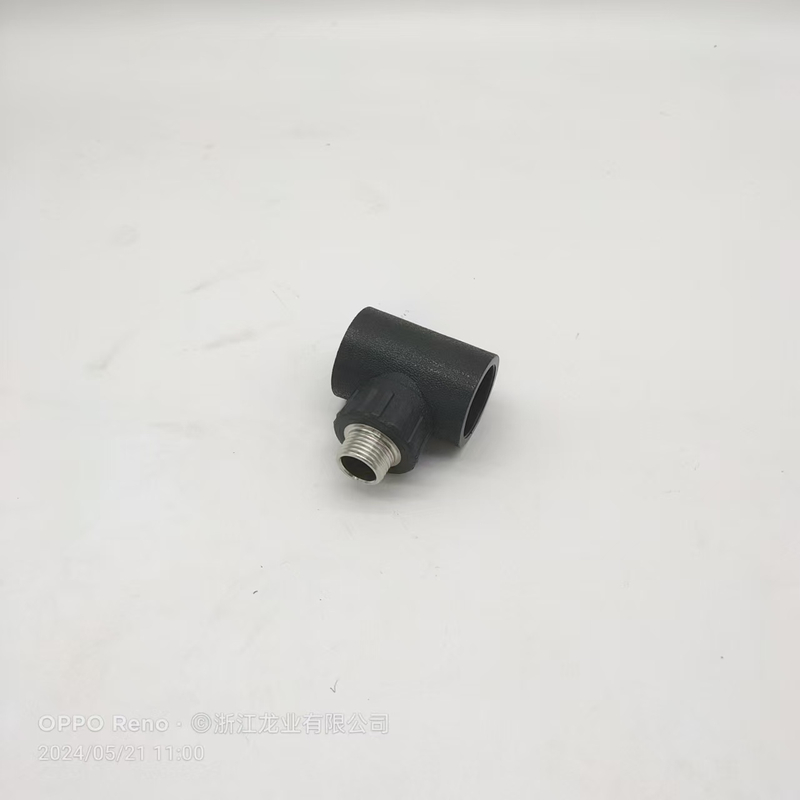
HDPE pipe fittings are connectors used to join HDPE (High-Density Polyethylene) pipes in a wide range of applications. They are made from a durable, flexible plastic that can withstand harsh conditions, such as extreme temperatures and corrosive chemicals. Unlike traditional materials like PVC and steel, HDPE fittings are resistant to cracking, rusting, and other common issues.
HDPE pipe fittings offer several advantages over PVC and steel. Here's a quick comparison:
Feature | HDPE Fittings | PVC Fittings | Steel Fittings |
Corrosion Resistance | Excellent | Poor | Moderate |
Flexibility | High | Low | Low |
Durability | Long-lasting | Moderate | Susceptible to rust |
Cost | Affordable | Low | High |
HDPE fittings are particularly valuable in environments where pipes need to flex or move due to shifts in the ground or temperature changes. This flexibility makes them a more reliable and long-lasting option than rigid materials like PVC and steel.
HDPE pipe fittings are used in a variety of industries:
● Water Supply Systems: HDPE fittings ensure smooth water flow and prevent leakage in both residential and industrial applications.
● Gas Distribution: These fittings are resistant to the chemicals found in natural gas and other gases, making them an ideal choice for gas pipelines.
● Chemical Industries: Their ability to withstand corrosion and aggressive chemicals makes them perfect for chemical plants.
Proper installation of HDPE pipe fittings is essential to maintain the system's integrity and ensure long-term reliability.
A correct installation guarantees that all connections are leak-proof. With HDPE fittings, fusion methods like electrofusion and socket fusion are used to create strong, tight joints that prevent leaks, even under pressure.
HDPE systems are designed to last for decades. Installing the fittings correctly ensures they can endure environmental stress without degradation. This durability is critical in avoiding the need for frequent repairs or replacements.
A small leak or misalignment can lead to major system failures, potentially causing costly damage. Proper installation minimizes these risks, saving you both time and money in the long run.
How They Work
Electrofusion fittings have built-in electric heating elements. When an electric current passes through, the heating element melts both the fitting and the pipe ends, fusing them together into a strong, leak-proof connection.
Common Applications and Pipe Sizes
These fittings are typically used for smaller diameter pipes, ranging from 1/2 inch to 16 inches. They are perfect for systems where access is limited or repairs are needed.
Advantages of Electrofusion Fittings
● Leak-Proof Connections: The fusion process creates tight, durable joints that minimize the risk of leaks.
● Ease of Use: Ideal for quick installations in confined spaces where other fusion methods may not be feasible.
● Strong, Reliable Joints: Electrofusion fittings offer high performance and long-lasting durability in challenging environments.
Specific Applications Where Electrofusion is Preferred
Electrofusion fittings are commonly used for repairing existing systems or working in small, confined areas. They are perfect for situations where butt fusion is impractical, such as working around obstacles or in tight spaces.
The Socket Fusion Process
In socket fusion, both the pipe end and fitting’s socket are heated using a special welding machine. After they reach a molten state, the pipe is inserted into the fitting, and the joint is held until it cools and solidifies.
Suitable Pipe Sizes and Applications
This method is suitable for smaller pipes, typically from 1/2 inch to 4 inches in diameter. It’s commonly used in residential water systems and small-scale gas distribution.
Benefits and Limitations
● Benefits: Simple to perform and requires less equipment. Offers tight, durable connections.
● Limitations: Limited to smaller pipe sizes and not ideal for large, industrial-scale installations.
How Butt Fusion Joins Pipes and Fittings
Butt fusion involves heating the ends of two pipes until they become molten, then pressing them together under controlled pressure to form a strong joint.
Applications for Larger Diameter Pipes
This method is best suited for pipes above 4 inches in diameter and is commonly used in large-scale water supply systems, gas pipelines, and industrial installations.
Strength and Durability of Butt Fusion Joints
Butt fusion joints are often as strong as the pipe itself, ensuring durability even under high pressure and challenging environmental conditions.
Typical Pipe Sizes for Butt Fusion
Butt fusion is used for larger diameter pipes, typically starting at 4 inches and going up to greater diameters, allowing for high-flow systems.
Types of Mechanical Fittings
Mechanical fittings include compression fittings and flange fittings. These fittings do not require heat to join the pipes but instead use mechanical pressure or bolts to create a seal.
When to Use Mechanical Fittings Instead of Fusion Fittings
Mechanical fittings are ideal for temporary installations, emergency repairs, or situations where fusion-based methods aren’t feasible. They are often used when pipes are under high pressure or temporary access is required.
Pros and Cons of Mechanical Fittings
● Pros: Easy to install, no need for specialized equipment. Can be used in various conditions.
● Cons: More prone to leaks over time, especially if not properly tightened. Less durable compared to fusion methods.
Scenarios Where Mechanical Fittings Are Ideal
Mechanical fittings are best for situations requiring fast, temporary solutions, such as emergency repairs or when needing to join pipes in locations with restricted access to fusion equipment.
Importance of a Clean, Square Cut
Making a precise, clean, square cut is crucial when installing HDPE pipe fittings. If the cut is uneven or angled, it can create a weak joint, leading to potential leaks and system failures. A proper cut ensures the pipe fits snugly into the fitting, creating a strong, leak-proof connection.
Different Pipe Cutters for Various Pipe Sizes
There are different types of pipe cutters depending on the size of the pipe. For smaller pipes, manual pipe cutters or ratchet cutters work well. For larger pipes, hydraulic pipe cutters or power saws may be necessary for a clean cut. Always choose the cutter designed for the diameter of the pipe you’re working with.
How to Ensure a Straight and Clean Cut
To achieve a clean cut:
● Use a pipe cutter with a sharp blade to minimize rough edges.
● Mark the cutting line carefully before cutting.
● Ensure the pipe is held steady while cutting to prevent movement.
How Chamfering Helps with Fitting Installation
Chamfering is the process of beveling the edge of the pipe to allow for smoother insertion into the fitting. This helps in better fusion during the heating process, resulting in a stronger joint. It also reduces stress at the connection point, preventing potential cracks or leaks.
Step-by-Step Instructions for Chamfering Pipe Ends
1. Place the pipe on a flat surface.
2. Use the chamfering tool to bevel the edge of the pipe at a 15-20 degree angle.
3. Smooth the edges after chamfering to avoid any burrs or rough spots.
4. Measure the depth of the fitting insertion to ensure correct alignment.
Electrofusion Welder vs. Socket Fusion Machine
Fusion welding machines are critical for installing HDPE pipe fittings. The two most common types are electrofusion welders and socket fusion machines.
● Electrofusion welders are used for fittings that have built-in heating elements, ideal for smaller pipes.
● Socket fusion machines are used to heat the pipe and fitting separately before joining, making them suitable for slightly larger pipes.
Setup and Calibration of Fusion Machines
Before use, ensure that the fusion machine is set up and calibrated correctly:
● Electrofusion welders need to have the right voltage, current, and time settings based on the fitting size.
● Socket fusion machines should be calibrated to ensure the pipe and fitting reach the required temperature for optimal fusion.
Temperature Control and Welding Parameter Adjustments
Fusion welding requires precise temperature control:
● For electrofusion, check the manufacturer’s specifications for voltage and welding time.
● For socket fusion, make sure the welding machine reaches the necessary temperature before inserting the pipe into the fitting.
For Tightening Mechanical Fittings
Mechanical fittings, such as compression fittings and flanges, require a torque wrench to ensure they are tightened properly. Too little torque can result in leaks, while over-tightening can damage the pipe or fitting.
Correct Torque Values to Avoid Over-Tightening
Use a torque wrench to tighten fittings to the manufacturer’s recommended torque values. These values can vary based on the fitting size and material, so always check the specifications. Tightening too much or too little can cause serious problems.
Proper Measuring Techniques for Pipe and Fitting Alignment
Accurate measurements are essential for ensuring the pipe aligns correctly with the fitting. Use a measuring tape or laser alignment tool to get precise pipe lengths. Make sure the pipe is positioned straight and centered in the fitting to avoid misalignments.
Marking Pipe Ends for Correct Depth in Fusion Fittings
Mark the pipe where it should be inserted into the fitting. This will ensure that you insert the pipe to the correct depth, which is essential for achieving a solid joint. Use a marker or tape to make the marking visible and easy to follow during installation.
Inspecting Pipe and Fittings for Defects
Before starting the installation, it's crucial to inspect both the HDPE pipe and the electrofusion fittings for any visible defects. Look for cracks, dents, or deformities on the pipe, as these could weaken the joint and lead to leaks. Similarly, inspect the fittings for any damaged heating elements or contamination that could affect the fusion process.
Measuring and Marking Pipe Ends
Accurate measurements are essential for a proper fusion. Use a measuring tape to mark the required insertion depth on the pipe. This mark will guide the placement of the pipe into the fitting, ensuring that the pipe is fused to the correct depth for a secure and leak-proof joint.
● Tip: Measure twice, cut once. Accuracy here is key!
How to Set Up the Electrofusion Welder
Setting up the electrofusion welder properly is critical for the success of the installation. First, connect the electrofusion fittings to the welder according to the manufacturer’s instructions. Ensure all connections are secure and clean, and that the electrofusion machine is calibrated to the correct voltage, current, and time based on the size of the pipe and fitting.
Step | Action |
Connect the fitting | Attach the fitting to the welder |
Set welding parameters | Choose appropriate voltage and time |
Inspect connections | Make sure all connections are secure |
Applying Correct Welding Parameters
To ensure a strong, reliable joint, it's essential to apply the correct welding parameters. These parameters are typically provided by the fitting manufacturer and include voltage, current, and welding time. Incorrect settings can lead to weak joints or incomplete fusion. Always follow the guidelines closely and adjust based on the pipe size and material.
● Voltage: Set according to fitting size
● Current: Ensure proper flow for the heating element
● Welding Time: Adjust based on pipe size and material
Cooling and Checking the Joint After Fusion
Once the fusion process is complete, allow the joint to cool naturally. Cooling time is just as important as welding time. During this period, do not disturb the fitting or pipe, as premature movement can lead to a weak connection.
After cooling, visually inspect the joint for any irregularities. The joint should appear smooth and consistent with no cracks or bubbles. Test the joint by applying pressure to ensure it is leak-proof.
● Visual Check: Look for smooth, uniform fusion
● Pressure Test: Apply the operating pressure to confirm joint integrity
By following these steps, you can successfully install HDPE electrofusion fittings, ensuring strong, durable, and leak-free connections in your piping system.
Before starting the fusion process, it’s important to properly prepare both the HDPE pipe and socket fusion fitting.
● Inspect the Pipe and Fittings: Look for any defects like cracks or dirt on the pipe and fitting.
● Clean the Pipe Ends: Use a clean cloth to wipe the pipe ends free from dust, oil, or any other contaminants.
● Measure and Mark: Measure the correct length for pipe insertion and mark it on the pipe to ensure a proper fit into the fitting.
Tip: Double-check the fitting size and alignment to avoid misfitting later on.
The next step is heating both the pipe end and the socket of the fitting using a socket fusion machine.
1. Setup the Socket Fusion Machine: Insert the fitting and pipe ends into the machine’s heater.
2. Set the Proper Temperature: Make sure the machine's temperature is correctly set according to the pipe size and material.
3. Heat Both Components: Heat the pipe and fitting for the recommended time until the ends are uniformly molten.
Action | Time/Temperature |
Heating pipe ends | 5-7 seconds at 250-260°C |
Heating the fitting | Same as pipe ends |
Tip: Always check the manufacturer’s specifications for heating times to ensure consistency.
After both components are heated to the correct temperature, it’s time to make the connection.
● Align and Insert the Pipe: Insert the heated pipe into the heated socket fitting, aligning both components straight. Make sure to push the pipe all the way to the marked insertion depth.
● Do Not Twist: Once inserted, do not twist the pipe or fitting, as it can disrupt the fusion process.
Tip: Hold the pipe firmly in place to avoid slippage during the cooling process.
After the pipe is inserted, hold the components in place until they cool and solidify. Cooling time is crucial to forming a strong, permanent joint.
● Holding the Pipe and Fitting in Place: Ensure the pipe and fitting remain in place, free from movement, until the joint cools. This ensures the joint solidifies correctly and forms a leak-proof seal.
● Cooling Time: Let the pipe and fitting cool for at least 2-3 minutes (longer for larger pipes). Don’t rush the cooling process.
Tip: Avoid touching the joint while cooling to prevent disrupting the fusion.
Once the cooling process is complete, it's time to verify the joint quality.
● Visual Inspection: The fusion joint should be smooth and free of cracks. Look for a uniform fusion bead around the fitting.
● Pressure Test: If necessary, perform a pressure test to ensure the joint holds under operating conditions.
Tip: Always ensure that the fusion joint is free of any visual defects before proceeding with installation.
By following these steps, you can successfully install HDPE socket fusion fittings to ensure a strong, durable, and leak-free connection in your piping system.
Ensure Clean, Smooth Pipe Ends
Before starting the fusion process, both pipe ends must be clean and smooth. Use a pipe cutter to make a straight, square cut. Ensure there are no burrs or rough edges on the pipe ends, as these could affect the fusion quality. If necessary, use a file or deburring tool to clean the edges.
● Tip: Always double-check for debris or contaminants on the pipe ends.
Aligning the Pipes for Fusion
Once the pipes are prepared, it’s time to align them in the butt fusion machine. The pipes must be properly aligned and secured to ensure an even fusion.
● Align the Pipe Ends: Position the pipe ends in the machine so that they are perfectly parallel and centered.
● Secure the Pipes: Clamp the pipes into the machine to prevent movement during heating and fusion.
Step | Action |
Align pipe ends | Ensure the pipes are aligned |
Secure pipes in machine | Clamp pipes tightly |
Tip: Proper alignment prevents uneven fusion and ensures a strong joint.
Correct Heating Times and Pressure
The heating process is crucial for achieving a reliable fusion joint. Both pipe ends need to be heated until the material reaches the correct molten state.
1. Set the Right Temperature: Adjust the fusion machine to the correct temperature for the pipe material, typically around 250-260°C for HDPE.
2. Time the Heating: Each pipe end should be heated for the recommended time. Typically, this is 5 to 10 seconds depending on the pipe size.
3. Apply Even Pressure: During the heating process, ensure that even pressure is applied to both pipe ends to allow for uniform heating.
Pipe Size (inches) | Heating Time (seconds) |
2 - 4 | 5 |
6 - 12 | 8 |
16+ | 10 |
Tip: Too little or too much heating can result in a weak or incomplete fusion.
Bringing the Heated Pipe Ends Together and Applying Pressure
Once the pipe ends are heated, they should be brought together under controlled pressure.
● Join the Pipe Ends: Gently press the heated pipe ends together until they meet, ensuring proper alignment.
● Apply Fusion Pressure: Apply the appropriate amount of pressure, usually around 80-100 psi, depending on the pipe size and the machine specifications.
Pressure (psi) | Recommended Pipe Size (inches) |
80-100 | Up to 6 |
100-120 | 8-12 |
120-150 | 16+ |
Tip: Keep the pipes under pressure for the recommended time to ensure a strong joint.
Allow the Fusion Joint to Cool
Once the fusion process is complete, the joint must cool before it can be handled or tested. Do not disturb the joint during the cooling period to prevent weak spots.
● Cooling Time: Typically, the cooling time is 2-3 minutes depending on the pipe size.
● Visual Inspection: After cooling, inspect the joint for any signs of incomplete fusion, cracks, or unevenness.
Tip: The joint should appear smooth and free from bubbles. A consistent, uniform fusion bead around the joint is a good indicator of quality.
By following these steps, you can successfully install HDPE butt fusion fittings to create a strong, reliable, and leak-proof connection in your pipeline system.
Inspect and Prepare the Fittings
Before installation, ensure the mechanical fittings (compression or flange fittings) are clean and free from any debris. Check for any visible defects such as cracks or dents, as these could compromise the integrity of the joint. Clean the pipe ends and the fittings to remove any dust, oil, or other contaminants that could affect the seal.
● Tip: Always inspect the gasket or sealing ring in compression fittings to ensure it is in good condition.
Inserting the Pipe
For compression fittings, insert the HDPE pipe into the fitting until it reaches the bottom. Ensure the pipe is aligned straight and the gasket is properly positioned inside the fitting. For flange fittings, align the pipe with the flange and insert it, making sure the bolt holes align for secure fastening.
● Compression Fittings: Insert pipe into fitting with gasket in place.
● Flange Fittings: Align pipe with flange and secure bolts.
Fitting Type | Pipe Alignment | Action |
Compression Fittings | Insert pipe fully into fitting | Ensure gasket is in place |
Flange Fittings | Align bolt holes | Secure with flange bolts |
Tip: Always check that the pipe is fully inserted into the fitting to avoid leaks later.
Correct Torque Values for Compression Fittings
Once the pipe is inserted into the fitting, it’s time to tighten the fittings. For compression fittings, use a torque wrench to apply the correct amount of pressure. Too little torque can result in leaks, while over-tightening can damage the pipe or fitting.
● Typical Torque Range: For small to medium compression fittings, torque values typically range from 30 to 50 ft-lbs. For larger fittings, check the manufacturer’s recommendations for torque specifications.
Fitting Size (inches) | Recommended Torque (ft-lbs) |
1/2 - 1 | 30 - 40 |
1-1/4 - 2 | 40 - 50 |
2-1/2 and larger | 50+ |
Tip: Always use the manufacturer’s recommended torque to avoid damaging the fitting or causing leaks.
Securing the Fitting
Once the fittings are tightened, ensure the seal is secure and leak-proof. For compression fittings, the gasket should be compressed evenly around the pipe. For flange fittings, check that the bolts are tightened in a cross-pattern to distribute pressure evenly and ensure a strong seal.
● Visual Inspection: Look for any visible gaps between the pipe and fitting.
● Leak Testing: After installation, pressure-test the system to confirm there are no leaks.
Tip: Double-check the bolt torque on flange fittings, especially if the system will be exposed to high pressure or fluctuating temperatures.
By following these steps, you can ensure the proper installation of HDPE mechanical fittings, whether compression or flange, for a secure and long-lasting, leak-free system.
How to Pressure Test a Newly Installed Pipeline
Once the HDPE pipe fittings are installed, the next crucial step is to test the system for leaks. Pressure testing ensures the entire system is secure and leak-free before it’s put into operation.
1. Fill the Pipeline: First, fill the pipeline with water or another testing medium (depending on the system’s requirements).
2. Apply Pressure: Gradually apply the required pressure to the system. The pressure should be based on the specifications of the HDPE pipes and fittings.
Pipe Size (inches) | Pressure Range (psi) |
2 - 4 | 80 - 100 |
6 - 12 | 100 - 120 |
16+ | 120 - 150 |
Tip: Always follow the manufacturer’s guidelines for pressure values.
Checking for Leaks at Fusion Joints and Mechanical Fittings
While the system is under pressure, perform a visual inspection for any signs of leaks. Focus on the fusion joints and mechanical fittings, where leaks are most likely to occur.
● Fusion Joints: Look for moisture or water droplets around the joint, which may indicate a weak seal.
● Mechanical Fittings: Check for any gaps, cracks, or water leaks near the compression or flange fittings.
Using Leak Detection Tools for More Accurate Results
If you cannot find leaks visually, consider using leak detection tools. These tools include ultrasonic leak detectors or dye testing, which can provide more precise results.
● Ultrasonic Detectors: Detect air escaping from joints even if it’s not visible.
● Dye Testing: Apply a fluorescent dye that will glow under UV light, revealing hidden leaks.
Options for Fixing Minor Fusion Joint Leaks
If you find a small leak at a fusion joint, you can repair the joint by reheating and refusioning it. This process involves applying heat to the leaking joint, then pressing the pipe and fitting back together.
● Reheating: Carefully heat the pipe and fitting to the required temperature.
● Fusion: Reapply pressure to the joint for a more solid seal.
Replacing Damaged Mechanical Fittings
If you detect a leak in a mechanical fitting, the solution may be to replace the fitting. Compression fittings or flanges that are cracked or worn need to be removed and replaced with new components to ensure the system remains leak-proof.
Tip: Always replace damaged parts immediately to avoid future failures and maintain system integrity.
How Uneven Cuts Affect Joint Quality and Lead to Leaks
One of the most common installation issues is making uneven cuts on the HDPE pipe. When the cut is not square, it can cause gaps or stress points when joining the pipe with the fitting. These weak spots increase the risk of leaks at the joint. To avoid this, ensure the pipe is cut straight and square.
● Tip: Use a high-quality pipe cutter to achieve a clean, precise cut.
● Consequence: A misaligned pipe cut leads to improper fitting connections, which can cause leaks over time.
Risks of Poor Fusion Due to Improper Heating
Overheating or underheating during the fusion process can result in poor joints that fail to bond properly. If the pipe ends are too hot, the material can become over-melted, weakening the joint. If the temperature is too low, the pipe and fitting won’t fuse properly, leading to weak seals.
● Tip: Always follow the manufacturer’s guidelines for heating times and temperatures.
● Consequence: Underheated joints may not bond correctly, while overheated joints can become brittle and prone to cracks.
Temperature | Effect |
Overheating | Weak, brittle joint, prone to cracking |
Underheating | Incomplete fusion, weak joint |
Correct Heating | Strong, durable joint |
How to Avoid Pipe Misalignment During Fusion and Mechanical Fitting Installation
Misalignment occurs when the pipe and fitting are not properly positioned during the fusion or installation process. This can lead to uneven pressure on the joint and result in a weak seal. To prevent misalignment, ensure both pipe ends and fittings are securely clamped and aligned before fusing or tightening.
● Tip: Use alignment guides and clamps to keep the pipes and fittings in place during fusion.
● Consequence: Misaligned fittings can create weak spots, leading to potential leakage or even joint failure.
Ensuring the Correct Pipe Insertion Depth
When installing HDPE pipe fittings, ensuring the correct insertion depth is vital for achieving a strong, leak-free joint. If the pipe is not inserted deep enough into the fitting, the joint may not fuse properly. Too deep of an insertion can result in excess pressure and cause the fitting to crack.
● Tip: Always mark the desired insertion depth on the pipe and double-check it before fusing.
● Consequence: Incorrect insertion depth can result in weak or incomplete joints, leading to leaks over time.
Insertion Depth | Effect |
Too Shallow | Weak bond, risk of leakage |
Correct Depth | Secure, leak-proof joint |
Too Deep | Pressure build-up, fitting damage |
This section covers the most common installation issues when working with HDPE pipe fittings, including problems with cutting, heating, misalignment, and insertion depth. Proper preparation and attention to detail during these steps can prevent these issues and ensure a durable, leak-free pipe system.
Importance of Proper Training for Installers
Proper training is key to successfully installing HDPE pipe fittings. Installers must understand the specifics of each fitting type, fusion methods, and the equipment they’re using. Inadequate knowledge or poor technique can lead to weak joints, leaks, and potential system failure.
● Tip: Regular training ensures installers stay updated on best practices and the latest technology.
● Consequence: Improper installation techniques can result in costly repairs or replacements.
Certification Requirements for HDPE Fitting Installation
Many regions and industries require installers to be certified before working with HDPE pipe fittings. Certification ensures that the installer has received formal training and adheres to industry standards. In some cases, improper installation without certification can void warranties or lead to legal issues.
Certification Type | Required for |
Manufacturer Certification | Fusion welding of HDPE fittings |
Industry Certification | Large-scale commercial projects |
Ensuring Machines and Tools Are Functioning Correctly
For successful HDPE pipe fitting installation, it’s vital to ensure that all tools and machines are well-maintained. Fusion machines, cutting tools, and other equipment should be checked regularly for wear and tear.
● Tip: Schedule regular maintenance checks for all equipment.
● Consequence: Poorly maintained tools may lead to inaccurate cuts or fusion joints, resulting in leaks.
Cleaning and Calibrating Fusion Machines
Fusion machines require regular cleaning and calibration to ensure accurate heating and pressure settings. Cleaning the machine after each use and calibrating it according to the manufacturer’s specifications ensures reliable performance during the next installation.
Machine Maintenance | Action |
Fusion Machines | Clean after each use, calibrate regularly |
Cutting Tools | Sharpen and check regularly |
Why It’s Critical to Adhere to Specifications for Fittings and Welding Machines
Each HDPE pipe fitting comes with manufacturer-specific guidelines for installation, heating, and pressure settings. Following these instructions is essential for creating strong, leak-proof joints. Deviation from these guidelines can lead to incorrect fusion or weakened joints, which could fail under pressure.
● Tip: Always refer to the manufacturer’s manual for precise details.
● Consequence: Not adhering to these guidelines can cause fitting failure, void warranties, or compromise the system’s integrity.
Installation Aspect | Importance |
Heating and Fusion Parameters | Ensures proper pipe fusion and joint strength |
Pressure Settings | Prevents excessive stress on fittings |
By focusing on training, equipment maintenance, and manufacturer guidelines, you can minimize common installation issues. These steps will ensure HDPE pipe fittings are installed properly, extending the longevity and reliability of your piping system.
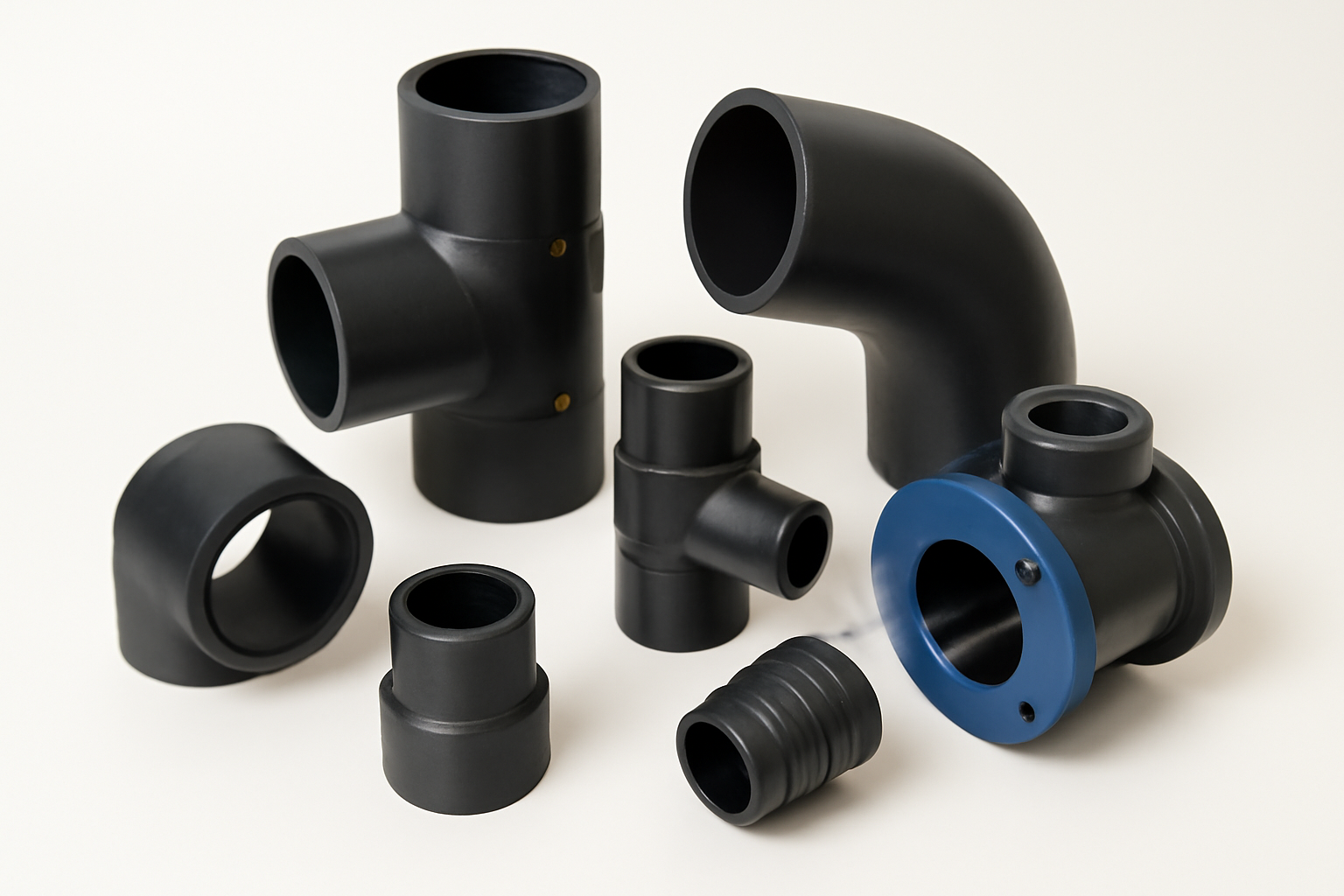
HDPE’s Resistance to Corrosion Compared to Steel Pipes
One of the biggest advantages of HDPE pipe fittings is their exceptional resistance to corrosion. Unlike steel pipes, which are prone to rust and corrosion when exposed to moisture or chemicals, HDPE remains unaffected by these elements. This makes it a durable option for systems exposed to harsh environments.
● Tip: HDPE pipes don’t need regular maintenance or coating to protect them from corrosion, unlike steel pipes.
Why HDPE is Preferred in Harsh Environments (Chemical Exposure, Moisture)
HDPE is highly resistant to chemicals and moisture, making it ideal for industries like chemical processing, water treatment, and oil and gas. Steel and PVC pipes may degrade or weaken when exposed to harsh chemicals or extreme moisture, whereas HDPE’s chemical resistance ensures longevity and reliability.
Material | Corrosion Resistance | Ideal Use Cases |
HDPE | Excellent | Chemical, water, and gas systems |
PVC | Moderate | Low chemical exposure environments |
Steel | Poor (rusts easily) | Applications not exposed to moisture or chemicals |
How HDPE Handles Movement in Pipelines Better Than Rigid Materials Like PVC
Unlike rigid materials like PVC, HDPE pipe fittings offer greater flexibility. This flexibility allows HDPE pipes to absorb movement from the ground, such as during earthquakes, ground settling, or shifting soil. PVC and steel pipes, on the other hand, can crack or break under these conditions.
● Tip: HDPE’s ability to bend and flex helps prevent damage during external stresses, ensuring the integrity of the system.
Long Lifespan of HDPE Fittings, Even Under Extreme Conditions
HDPE fittings are designed to last for decades, even in extreme temperatures and weather conditions. This makes them a long-term investment, reducing the need for frequent repairs or replacements. While PVC may degrade in UV light and steel can corrode, HDPE stays reliable under varying conditions, including UV exposure, extreme cold, and high temperatures.
Material | Lifespan | Durability | Ideal for |
HDPE | 50-100 years | Highly flexible and durable | Harsh environments, high movement |
PVC | 25-50 years | Rigid, less durable | Moderate conditions, lower stress |
Steel | 20-50 years | Prone to rust | Stable conditions, no moisture exposure |
Lower Installation and Maintenance Costs for HDPE Systems
HDPE pipe fittings are often more cost-effective than steel or PVC, especially when factoring in installation and maintenance costs. HDPE’s flexibility and ease of installation reduce labor time and costs. Additionally, HDPE systems require less maintenance since they are resistant to corrosion and damage.
● Tip: HDPE pipes have a lower initial cost and provide long-term savings due to reduced repair and replacement needs.
Reduced Need for Frequent Repairs Due to HDPE’s Durability
The durability of HDPE fittings significantly cuts down on the need for repairs. Steel pipes often need to be replaced due to rust and corrosion, and PVC may crack under movement. HDPE’s resistance to damage means fewer repairs and a longer-lasting system, ultimately saving on maintenance costs.
Material | Installation Cost | Maintenance Cost | Lifetime Cost |
HDPE | Low | Low | Lowest over time |
PVC | Moderate | Moderate | Moderate |
Steel | High | High (due to corrosion) | Highest over time |
Choosing HDPE pipe fittings over PVC or steel offers multiple benefits: superior corrosion resistance, flexibility, durability, and cost-effectiveness. These qualities make HDPE the preferred choice for both residential and industrial piping systems, especially in environments subject to movement or harsh conditions.
A: The best method depends on the pipe size and application. Butt fusion is ideal for larger pipes, creating strong, permanent joints. Electrofusion is preferred for smaller pipes or repairs in confined spaces. Socket fusion is suitable for small diameter pipes and residential use, providing simple, reliable joints.
A: Installation time varies by pipe diameter and fitting type. Smaller pipes (1/2 to 2 inches) typically take less time, while larger pipes may require more time for fusion. Complexity and site conditions also affect installation speed.
A: HDPE pipe fittings are suitable for water, gas, and chemical applications due to their corrosion resistance. However, they may not be the best option for high-temperature systems or where extreme pressure is involved, such as steam systems.
A: HDPE fittings are more flexible, durable, and resistant to corrosion compared to steel and PVC. They perform better in harsh conditions, such as high-moisture or chemically aggressive environments. HDPE offers superior long-term performance and fewer maintenance costs, making it ideal for high-performance systems.
Proper HDPE pipe fitting installation is essential for strong, leak-proof connections. Focus on correct fusion methods like electrofusion, socket fusion, or butt fusion based on pipe size and application.
When choosing the right fitting and installation method, consider project needs and the fitting’s performance in specific conditions.
Make sure to follow all guidelines, and don’t hesitate to consult with experts for proper installation and long-lasting results.


